The open road calls, and for many adventurers, truck camping offers an unparalleled sense of freedom and connection with nature. Gone are the days of rigid hotel reservations and cramped car seats. However, the dream of sleeping soundly under the stars can quickly turn into a restless night if your mobile sleeping quarters aren’t up to par. For truck owners, a well-chosen and properly set-up blow-up bed can transform the truck bed into a surprisingly comfortable haven. This comprehensive guide will walk you through every step, from selecting the right air mattress to maintaining its longevity, ensuring your roadside slumber is consistently restful.
The Foundation of Comfort: Choosing the Right Blow-Up Bed

Not all air mattresses are created equal, and the unique environment of a truck bed presents specific challenges. Making the right choice upfront is crucial for long-term satisfaction.
1. Size Matters: Truck Bed Dimensions and Air Mattress Fit
The most critical factor is ensuring your chosen air mattress will actually fit within your truck bed. This might seem obvious, but neglecting this can lead to a mattress that’s too big, too small, or awkwardly shaped.
- Measure Twice, Buy Once: Before you even begin browsing, meticulously measure the length, width, and any potential obstructions (like wheel wells or bed liners) of your truck bed. Most truck beds are not perfectly rectangular.
- Common Truck Bed Sizes: Truck beds come in various lengths (e.g., short, standard, long bed) and widths. A “full” or “queen” size air mattress might seem appealing, but if your truck bed is a standard size, it might not offer the best fit. Many manufacturers offer “truck bed air mattresses” specifically designed for these spaces, often featuring cutouts for wheel wells.
- Consider Height: The height of the mattress also plays a role. A mattress that’s too tall might make entry and exit difficult or hit the cab of your truck.
2. Durability and Material: Withstanding the Elements and Wear
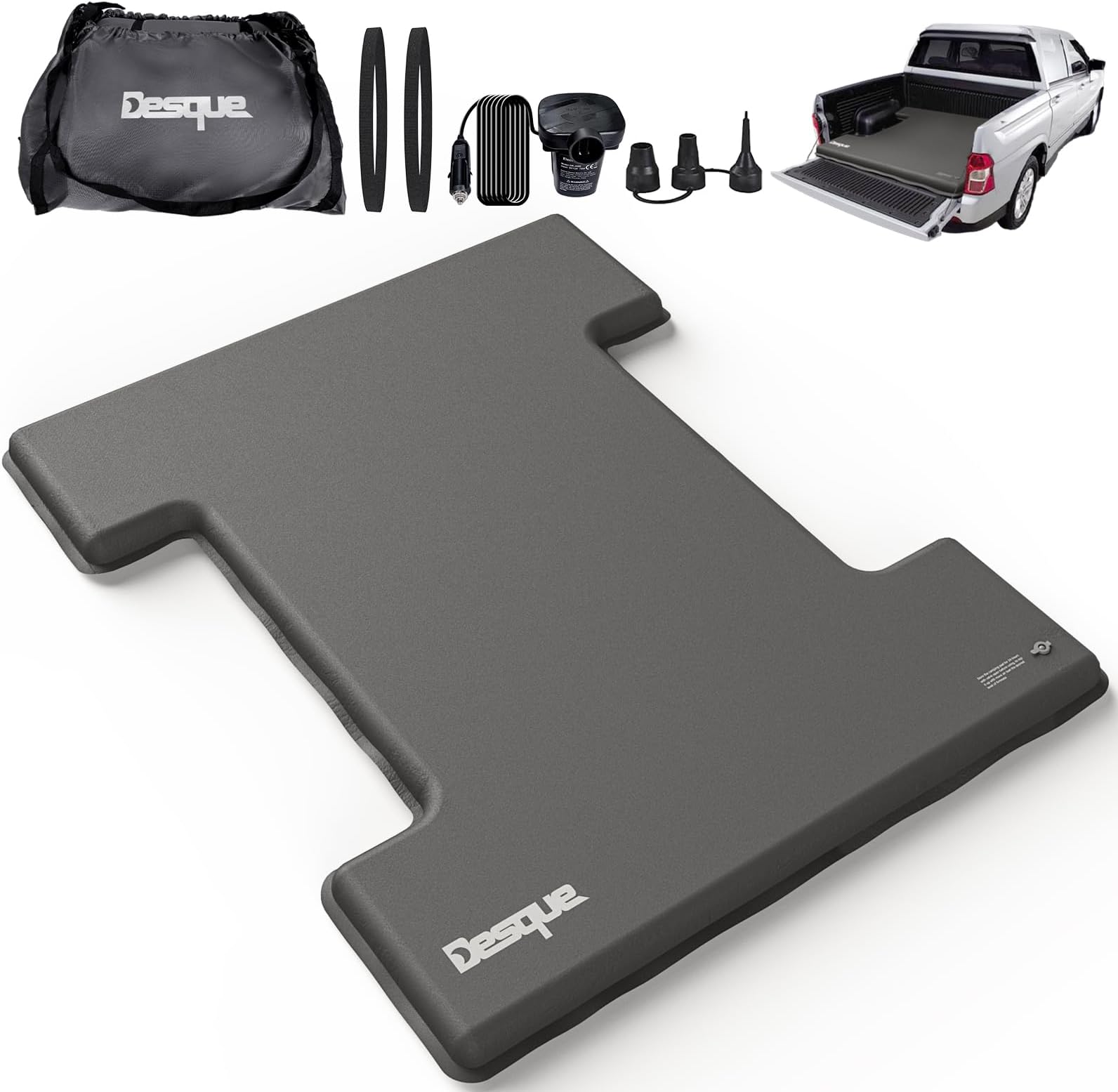
Your truck bed is exposed to more than just your body weight. Dust, potential sharp objects, and varying temperatures can all take their toll.
- Heavy-Duty PVC: Look for air mattresses made from thick, puncture-resistant PVC. This is the industry standard for durability.
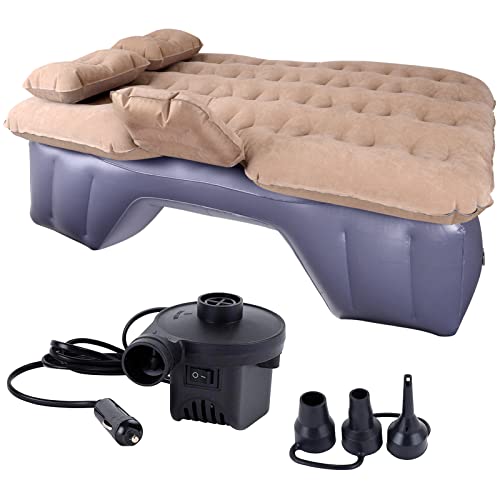
- Flocked Tops: A flocked or velour-like top surface adds comfort, reduces slippage, and provides a bit of insulation. It also offers a more pleasant feel than bare plastic.
- Reinforced Seams: Pay attention to the quality of the seams. Well-stitched and glued seams are less likely to leak over time.
3. Inflation System: Powering Your Comfort
How you inflate the mattress can significantly impact its practicality.
- Built-in Pumps: Many modern air mattresses come with integrated electric pumps. These are incredibly convenient, as they eliminate the need for separate accessories. However, ensure they can run off your truck’s power source (e.g., 12V adapter).
- Manual Pumps: While less common for truck beds, some users prefer manual pumps for their independence from a power source. Battery-operated pumps are also an option.
- Inflation Time: Consider how quickly the mattress inflates and deflates. You don’t want to spend precious adventure time wrestling with a slow-inflating mattress.
Case Study: Sarah, an avid overlander, initially opted for a standard queen-size air mattress for her Tacoma. While it fit lengthwise, the wheel wells created uncomfortable pressure points. She eventually invested in a truck-bed-specific air mattress that accounted for these contours, significantly improving her sleep quality and reducing the need for constant readjustment.
Setting Up for Success: Optimizing Your Truck Bed Sleep System

Once you have the right air mattress, the setup process is key to a comfortable and functional sleeping arrangement.
1. Preparing the Truck Bed: A Clean Slate for Sleep
A clean and smooth truck bed is the unsung hero of a good night’s sleep on an air mattress.
- Thorough Cleaning: Remove any debris, dirt, or sharp objects from the truck bed. A quick sweep or vacuuming is essential.
- Bed Liner Considerations: If you have a spray-in bed liner, it generally provides a good surface. However, if you have a removable plastic bed liner, ensure it’s securely fastened and free of any rough edges that could puncture the mattress.
- Consider a Tarp or Ground Cloth: For added protection against punctures and to create a slightly softer base, consider laying down a heavy-duty tarp or a thick ground cloth before inflating the mattress.
2. Strategic Placement: Maximizing Space and Comfort
Where you position the mattress within the truck bed can make a difference.
- Centering is Key: Center the mattress as much as possible to distribute weight evenly and prevent it from shifting during the night.
- Clearances: Ensure there’s enough clearance around the mattress for you to comfortably get in and out, as well as to access any gear you might need.
- Consider the Tailgate: If your mattress extends to the tailgate, ensure the tailgate is securely closed or lowered in a way that doesn’t put undue stress on the mattress.
3. The Inflation Ritual: Achieving Optimal Firmness
This is where your chosen pump comes into play.
- Follow Manufacturer Instructions: Always adhere to the specific inflation guidelines provided by the air mattress manufacturer. Over-inflation can stress seams, while under-inflation leads to discomfort.
- Gradual Inflation: Inflate the mattress gradually, checking for any signs of strain or unusual bulges.
- The “Sink Test”: Once mostly inflated, lie down on the mattress. You should feel supported but not as if you’re sinking to the bottom. Adjust the firmness until it feels right for your body. This will vary from person to person.
- Consider Temperature Fluctuations: Air expands when warm and contracts when cold. If you’re camping in areas with significant temperature swings, you might need to slightly adjust the inflation level in the morning or evening.
4. Bedding and Accessories: The Finishing Touches
Elevate your truck bed sleeping experience with the right bedding.
- Sleeping Bags: Choose a sleeping bag appropriate for the expected temperatures.
- Pillows: Inflatable or compressible camping pillows are ideal for saving space.
- Sheets: Fitted sheets designed for air mattresses can help keep your sleeping bag from shifting and add a layer of comfort.
- Insulation: Depending on the season, a sleeping pad placed *under* the air mattress can provide an extra layer of insulation from the cold truck bed.
Statistic: According to a survey by REI, 70% of campers prioritize comfort when choosing sleeping gear, highlighting the importance of a well-inflated and supportive air mattress.
Maintaining Peak Performance: Ensuring Longevity and Reliability
Your blow-up bed is an investment, and with proper care, it can provide countless nights of restful sleep.
1. Deflation and Storage: The Art of Packing It Away

Improper deflation and storage are common culprits for premature wear and tear.
- Complete Deflation: Ensure the mattress is fully deflated. Open all valves and press down on the mattress to expel as much air as possible. This prevents stress on the seams during storage.
- Folding vs. Rolling: While rolling is often recommended for sleeping bags, for air mattresses, a neat fold is generally preferred. Fold it along its original creases as much as possible to avoid creating new, permanent wrinkles.
- Dry and Clean Storage: Store the deflated mattress in a clean, dry place. Moisture can lead to mold and mildew, which can degrade the material and create unpleasant odors.
- Avoid Sharp Objects: Do not store anything sharp on top of or next to the air mattress.
- Original Bag or Protective Cover: If you still have the original storage bag, use it. Otherwise, consider a durable canvas or nylon bag that will protect it from dust and damage.
2. Puncture Prevention: Your First Line of Defense

Punctures are the bane of any air mattress owner.
- Regular Inspections: Before and after each use, visually inspect the mattress for any signs of wear, cuts, or small holes.
- Be Mindful of Your Surroundings: When setting up, be aware of your environment. Avoid placing the mattress on rough surfaces, near sharp branches, or in areas with loose gravel.
- Use Protective Layers: As mentioned earlier, a tarp or ground cloth is an excellent preventative measure.
3. Cleaning and Care: Keeping It Fresh
Hygiene is important, even in a truck bed.
- Gentle Cleaning: For minor spills or dirt, use a damp cloth with mild soap. Avoid harsh chemicals or abrasive cleaners, as they can damage the material.
- Thorough Drying: After cleaning, ensure the mattress is completely dry before deflating and storing. You can let it air dry in a well-ventilated area, out of direct sunlight.
- Odor Control: If the mattress develops an odor, ensure it’s thoroughly cleaned and dried. Baking soda can also be used as a natural deodorizer by sprinkling it on the mattress and then vacuuming it off after a few hours (once completely dry).
4. Repairing Leaks: Extending its Lifespan
Minor leaks are often repairable, saving you the cost of replacement.
- Locate the Leak: The easiest way to find a leak is to inflate the mattress and listen for the hissing sound. If that fails, you can try the soapy water method: spray soapy water over the inflated mattress, and bubbles will form at the location of the leak.
- Patching Kits: Most air mattresses come with a repair kit. Follow the instructions carefully. Typically, this involves cleaning the area, applying adhesive, and then placing a patch over the leak.
- Allow Adequate Curing Time: Ensure the patch is fully cured according to the adhesive’s instructions before reinflating or using the mattress.
Example: Mark, a long-haul trucker, regularly uses an air mattress in his sleeper cab. He religiously cleans and dries it after each trip and stores it in a climate-controlled locker when not in use. This meticulous care has allowed his mattress to last over five years without any significant issues.
Beyond the Basics: Enhancing Your Truck Bed Sleeping Experience
Once you’ve mastered the fundamentals, consider these additional tips to elevate your truck bed comfort.
- Portable Power Solutions: Invest in a portable power station or a robust deep-cycle battery if you plan on using electric pumps frequently or for extended periods.
- Truck Bed Canopies/Caps: A well-fitted truck bed canopy or cap can significantly enhance your sleeping experience by providing protection from the elements and increasing privacy.
- Ventilation: Ensure adequate ventilation to prevent condensation buildup, especially in humid conditions. Some canopies offer mesh windows for this purpose.
- Blackout Curtains: For light sleepers, consider blackout curtains or reflective shades to block out ambient light.
Your Truck Bed Oasis Awaits
Transforming your truck bed into a comfortable sleeping space is achievable with the right approach to setup and maintenance. By carefully selecting a durable, appropriately sized blow-up bed, preparing your truck bed meticulously, and adhering to best practices for inflation, storage, and cleaning, you can ensure countless nights of restful slumber on your adventures. Remember that preventative measures, such as puncture prevention and regular inspections, are key to extending the lifespan of your air mattress and maximizing your investment. With a little attention to detail, your truck bed can become your personal oasis on wheels, ready to whisk you away to your next memorable destination.